


Survival Seed Vault - 35 Varieties
Survival Seed Vault - 35 Varieties
BUNDLE & SAVE
Couldn't load pickup availability

Survival Seed Vault - 35 Varieties
What's included in the kit?
What's included in the kit?
Over 16,000 seeds across 35 garden varieties, including vegetables, herbs and fruiting crops. The seed packets come together in one pouch. Plant what you need and keep the rest for later.
Are these non-GMO?
Are these non-GMO?
Yes. The kit contains non-GMO heirloom seeds. You can save mature seeds from your plants for future planting.
Do I need special soil, tools or experience?
Do I need special soil, tools or experience?
No specialist equipment or gardening experience is needed. Start with garden soil or potting mix, water, a sunny spot and a container with drainage or a garden bed.
How long can I store the seeds?
How long can I store the seeds?
You can store the kit for future planting. Keep it cool, dry and out of direct sunlight. Storage life varies by seed variety; check a few seeds for germination before a large planting.
What if I don't have a large backyard?
What if I don't have a large backyard?
You can use containers, buckets with drainage, raised beds or a small garden patch. Leafy greens and herbs suit smaller spaces. Give larger crops deeper containers and room to grow.


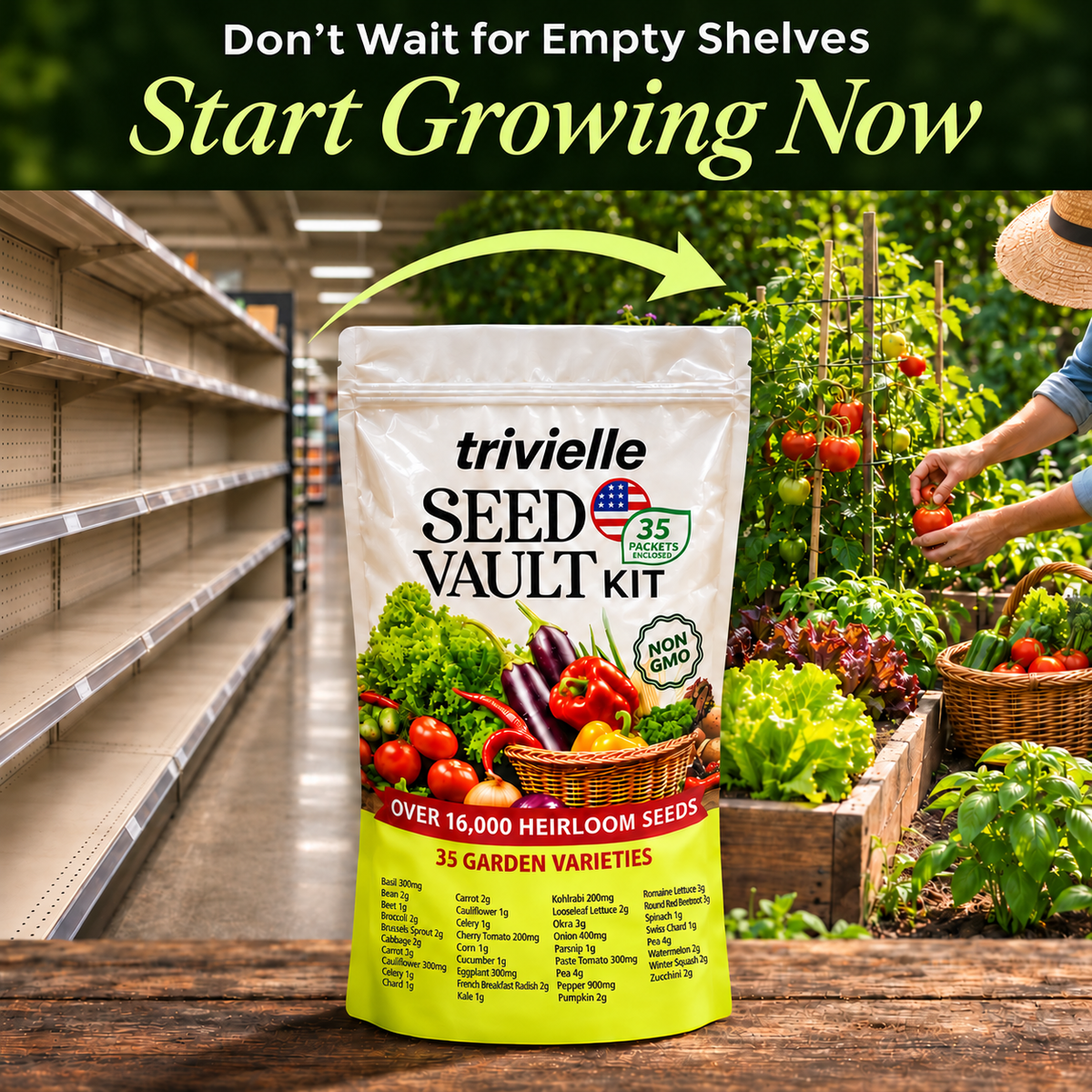

When the shelves are empty, what will you feed your family?
35 varieties. A food-growing backup you can start at home.
Real harvests from our customers
-

I’ve realized you shouldn't depend on others for basic necessities like food, water, electricity. And growing these actually turned out to be super easy. Even on a small balcony. Knowing I can feed myself gives me peace of mind.
-

Vegetables have gotten so expensive in grocery stores so I decided to try out growing my own. They grew super fast and now that I'm replanting for the third time I know that I've saved THOUSANDS. 10/10
-

Tried growing some stuff before but nothing sprouted. Was pleasantly surprised when basically all of these sprouted and started growing. Planning on planting even more next year.
-

These turned out so good. The taste is just something you have to try for yourself. All my neighbors started their own gardens after trying them.
-

Didn't plant much this year but will definitely try growing much more next year. It was way easier and faster than I thought.


What's in your Seed Vault?
35 garden varieties. Over 16,000 seeds.
From leafy greens and root vegetables to tomatoes, peppers, beans and herbs. See the full selection beside this section.
From planting day to harvest
Start with a few seedlings. Give them space, water and time to grow.


The vegetables you want. All in one kit.
Choose what you eat. Plant what fits your garden.
Frequently Asked Questions
How much food can I grow?
How much food can I grow?
Plan around the space you can maintain and the vegetables you eat. The kit gives you seeds for many plantings; your harvest depends on the crops, how many you plant, the growing space and care. Start with a few varieties and expand from there.
How should I store unused seeds?
How should I store unused seeds?
Close the packets and pouch after use, and store them in a cool, dry, dark place away from heat and humidity. Keep packets labeled so you know which variety you are planting.
What helps the seeds sprout?
What helps the seeds sprout?
Plant at the depth suited to the seed, keep the growing medium evenly moist without waterlogging it, and provide suitable warmth. Germination timing varies between varieties, so start with a small batch of each.
What if I've never gardened before?
What if I've never gardened before?
Choose two or three varieties for your first planting. Label each one, check moisture regularly and leave space for the plants to mature. You can learn the routine without planting the whole kit at once.
Can I save seeds and plant them again?
Can I save seeds and plant them again?
Yes. Collect seeds when they are fully mature, dry them thoroughly and store them labeled. Keep varieties from crossing when you want the same traits next season. Some vegetables, including carrots and beets, need a second season to produce seed.
What if the kit is not right for me?
What if the kit is not right for me?
Your purchase comes with a 30-day money-back guarantee. Contact support@trivielle.com for return help and see our refund policy for the return conditions.

Your first season starts with a few seeds.
Start with a handful of crops. Learn as they grow.

Give them a garden to get started.
For the gardener who always needs more seeds. Or the friend who keeps saying they want to grow their own food.
Birthdays. Housewarmings. A first garden. One pouch gives them plenty to try.

Grow food in the space you have.
A balcony with pots. A patio with containers. A raised bed in the backyard.
Choose crops that fit your space and sunlight. You can start a garden without owning a field.

Save your seeds. Skip buying them again.
Keep seeds from this harvest for your next planting. One kit can become the start of a seed supply you keep growing.
Dry and label saved seeds. Keep varieties from crossing when you want the same traits next season. Some crops produce seed in their second year.